
“A basic system that the team actually uses is worth a lot more than a great-looking SOP sitting in a folder that nobody opens.”
Most builders know their systems need work. Far fewer actually sit down and pull the business apart to fix it.
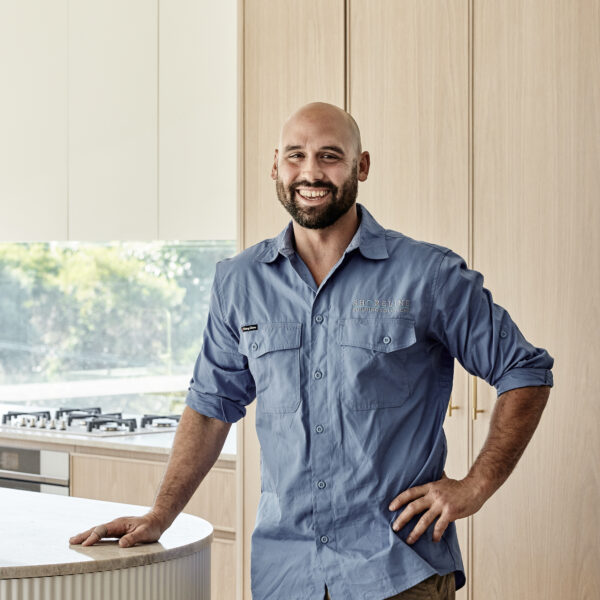
This month’s Member Spotlight features Brett Sarno, director of Shoreline Building Solutions, building renovations, additions and custom homes across the southern Gold Coast and northern NSW.
Like a lot of builders, Brett had a business that ran on what was in his head. It worked while he could keep across everything, but it meant every question, every check and every decision came back to him. So he started building the systems to change that, and he’s been generous enough to share exactly what he put in place.
We caught up with Brett Sarno to hear how he did it.
For members who don’t know you yet, tell us a bit about Shoreline and where you’re working.
Shoreline Building Solutions is a residential building company doing renovations, additions and custom homes. We’re based around the Southern Gold Coast and Northern NSW, and I’m still pretty hands-on with the builds, clients and running the business.
What were your systems and processes like before you started pulling them apart? What did a normal week look like?
A lot of it was in my head, to be honest. I knew how I wanted things done, but there wasn’t always a documented process someone else could follow, so I was answering the same questions, checking things myself and jumping between site, clients, pricing, costs, emails and the team.
It worked while I could keep across everything, but it meant the business relied too heavily on me and I was carrying a lot of it around in my head even when I wasn’t at work.
What did you actually put in place?
The biggest thing was creating a central Systems Hub so there was one place for the team to find our procedures, checklists, templates and links instead of having information sitting in different places or relying on me to explain it.
We started breaking the recurring parts of the business down into proper SOPs and flowcharts.
For example, we’ve now got a process for logging actual job costs into Buildxact and cross-checking them against Xero, monthly WIP reporting so we’re looking at contract value, variations, actual costs, forecast costs, progress claims and margins, and a monthly overhead review so we can separate project costs from genuine business overheads and pick up unusual or recurring expenses.
We’ve also built out an admin operating system covering emails, calendar, Buildxact, Xero, budget updates, labour hours and reporting, plus a proper subcontractor onboarding process covering interviews, agreements, licences, insurance, WHS requirements, HazardCo and follow-ups.
The idea is that there’s a clear next step and a checklist to follow, but anything unclear still gets flagged rather than guessed.
What’s changed since, in the day to day, with your team, or in what you’re carrying around in your head?
Probably the biggest change is that there’s now somewhere to go before everything automatically comes back to me. Routine admin, reporting and checks can follow a process, and I’ve got better visibility over costs, budgets and what needs attention.
It’s definitely still a work in progress and we’re always finding things to improve, but that’s probably part of systemising as well. The goal isn’t for me to disappear from the business, it’s for the business not to stop every time I’m unavailable or for every small decision to need me.
What would you say to a builder who knows they need to do this and hasn’t started?
Don’t try to systemise the whole business in one weekend. Start with the stuff you do all the time, the questions you keep getting asked, or the things that cause problems when someone misses a step.
Write down how you actually do it, turn that into a simple checklist or flow, get someone else to use it and then fix the gaps. It doesn’t need to look perfect. A basic system that the team actually uses is worth a lot more than a great-looking SOP sitting in a folder that nobody opens.
That’s been a big lesson for me.
What’s next for you and the business?
For me it’s about tightening up what we’ve already built and making sure the systems are actually being used and improved, not just adding more documents for the sake of it.
I want better visibility over our pipeline and job costs, more accurate quoting and procurement, more projects going through our pre-construction process properly, and a reliable team around me with clear responsibilities. Longer term I want my role to move more towards leadership, clients and planning rather than needing to be involved in every little thing day to day.
I also want the business to give me a bit more headspace outside work. I enjoy building and still want to be involved, but the end goal is a solid business that can run consistently without everything depending on me, and that leaves me with more time and energy for Bec and the boys as well.