A toolbox talk helps builders improve communication, strengthen leadership and deliver better projects every day.
Small conversations. Big results.
Every successful building project starts with clear communication.
A toolbox talk is one of the simplest ways to keep your team aligned, improve productivity and reduce costly mistakes before they happen.
While many builders think of toolbox talks as nothing more than a safety requirement, they’re actually a powerful leadership tool that helps everyone understand what’s expected, work together more effectively and deliver better outcomes on every project.
Whether you’ve got two people on site or twenty, creating a consistent routine around communication builds stronger teams, smoother projects and a business that’s easier to lead.
Be sure to also subscribe to the Live Life Build YouTube channel.
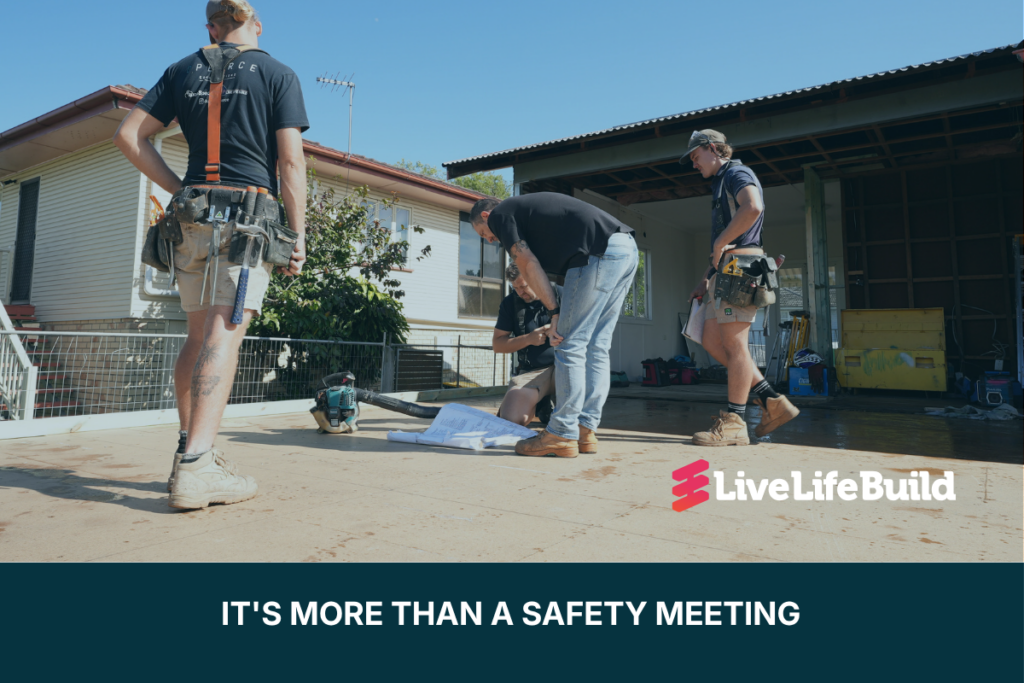
A toolbox talk is about more than safety
When many people hear the words “toolbox talk”, they immediately think of a quick meeting about site safety.
Safety absolutely deserves a place in every conversation, but limiting your toolbox talks to compliance means you’re missing one of the biggest opportunities to improve your business.
A well-run toolbox talk creates alignment before the day begins. It gives your team clarity around priorities, expectations and responsibilities, while providing an opportunity to identify potential challenges before they become expensive problems.
Instead of every person working from their own assumptions, everyone starts the day with the same understanding of what success looks like.
That simple habit creates consistency across your projects and confidence across your team.
A great toolbox talk can include:
Safety considerations for the day’s work.
- Project priorities and milestones.
- Individual roles and responsibilities.
- Materials or deliveries arriving on site.
- Upcoming trades and scheduling.
- Quality expectations.
- Questions, feedback and ideas from the team.
When everyone leaves the meeting knowing exactly what’s expected, your projects spend less time recovering from mistakes and more time moving forward.
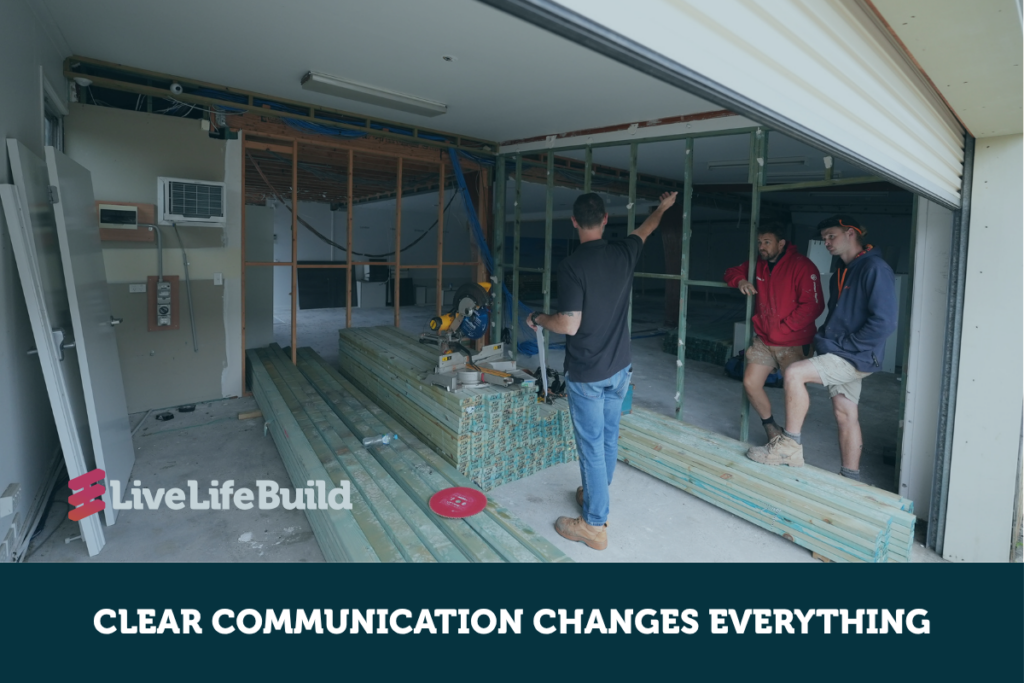
Why consistent communication matters
One of the biggest frustrations builders face isn’t poor workmanship.
It’s poor communication.
Trades arrive without knowing what’s changed.
Apprentices finish one task and aren’t sure what comes next.
Materials get installed before another trade is ready.
Small misunderstandings quickly become delays, rework and unnecessary stress.
Most of these problems can be avoided with ten to fifteen minutes of planning at the start of the day.
That’s why, throughout his own building business, Duayne encouraged every Lead Carpenter to spend time with their team each morning reviewing the day’s plan, discussing priorities and making sure everyone understood their responsibilities.
When apprentices know what’s expected before they pick up their tools, they become more confident.
When supervisors know the priorities, they make better decisions.
When everyone understands the bigger picture, the entire project flows more efficiently.
Communication isn’t something that slows a project down.
It’s what keeps it moving.
Five ways a toolbox talk improves your building business
A consistent toolbox talk isn’t just another meeting to fit into your day. It’s one of the simplest habits that can create lasting improvements across your projects, your team and your business.
Here are five reasons every builder should make toolbox talks part of their routine.
1. Greater productivity
One of the biggest causes of lost productivity on site is uncertainty.
When team members aren’t sure what comes next, valuable time is wasted asking questions, waiting for direction or moving between tasks.
A toolbox talk removes that uncertainty before work begins. Everyone knows what they’re responsible for, what needs to be completed first and what success looks like for the day.
Instead of reacting throughout the day, your team gets straight to work with confidence and purpose.
2. Better quality outcomes
Quality doesn’t happen by accident.
It comes from clear expectations, consistent communication and attention to detail.
Toolbox talks provide the opportunity to discuss quality standards before work starts. If there are particular finishes, client requests or construction details that need extra care, everyone hears the same message at the same time.
That consistency helps reduce defects, rework and costly mistakes while maintaining the standard your clients expect.
3. Stronger team culture
Builders often tell us they’re looking for a team that takes ownership.
Ownership starts with involvement.
A toolbox talk shouldn’t be a one-way conversation where the builder simply gives instructions. It should create an environment where people feel comfortable asking questions, sharing ideas and raising concerns before they become problems.
When your team feels heard, they become more engaged.
Over time, these conversations build trust, strengthen relationships and create a culture where everyone works towards the same goal.
4. Better leadership
As your business grows, you’ll spend less time on the tools and more time leading your people.
That shift requires intentional communication.
Toolbox talks give you regular opportunities to reinforce your expectations, coach your team and develop future leaders within your business.
Lead Carpenters, Supervisors and Project Managers all become better communicators when they consistently lead these conversations.
Leadership isn’t built through occasional meetings.
It’s built through consistent daily habits.
5. Less stress for everyone
Poor communication creates stress.
People become frustrated when expectations aren’t clear, work needs to be redone or problems could have been avoided with a simple conversation.
Toolbox talks reduce uncertainty.
They help your team stay organised, improve planning and give everyone greater confidence throughout the day.
When projects run more smoothly, everyone benefits, from your team through to your clients.
How to run an effective toolbox talk
The best toolbox talks are short, focused and consistent.
They don’t need to run for an hour.
In fact, ten to fifteen minutes is usually enough.
A simple structure might include:
- Welcome the team and outline the day’s priorities.
- Discuss any safety considerations.
- Confirm who is responsible for each task.
- Review deliveries, trades and scheduling.
- Highlight any quality expectations.
- Ask for questions, feedback or concerns.
- Finish with clear actions before work begins.
Keeping the conversation structured helps your team stay engaged while ensuring everyone leaves with the same understanding.
Remember, consistency matters more than perfection.
A ten-minute toolbox talk every morning will have a far greater impact than a one-hour meeting once a month.
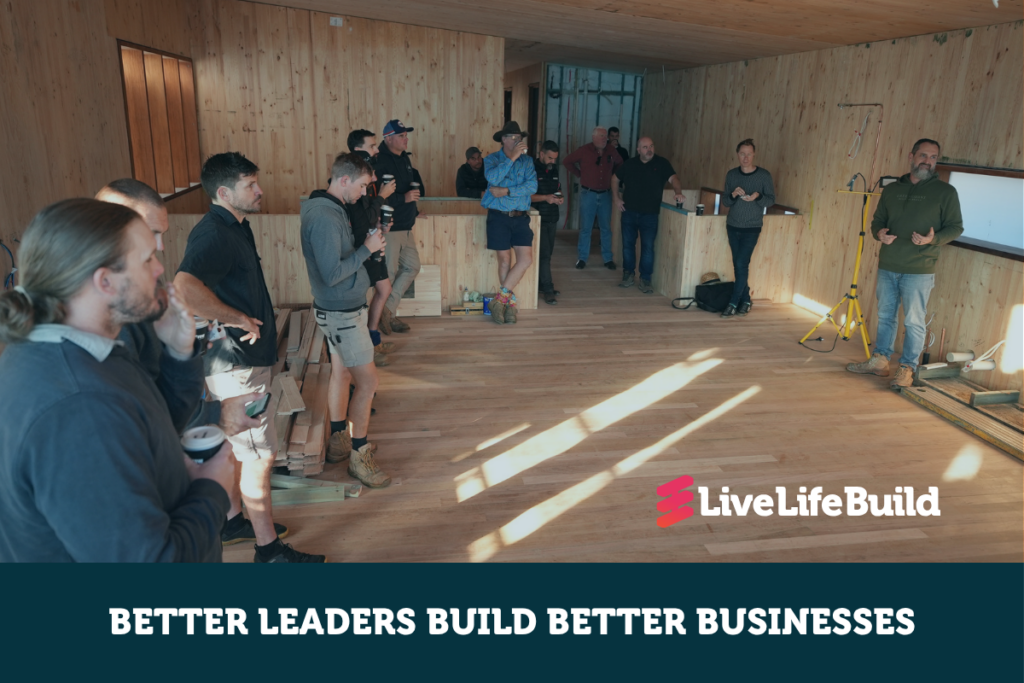
Better toolbox talks lead to better businesses
Every builder wants smoother projects, stronger teams and happier clients.
Those outcomes don’t come from working harder.
They come from creating systems that help people perform at their best.
A toolbox talk is one of those systems.
It’s a simple habit that strengthens communication, improves quality, increases productivity and creates a workplace where people know what’s expected of them every day.
The best part is that you can start tomorrow morning.
You don’t need expensive software or complicated processes.
Just gather your team, have the conversation and build consistency over time.
Take your leadership further with Elevate
At Live Life Build, we believe better leadership creates better businesses.
Inside Elevate, you’ll learn the systems, leadership strategies and practical tools that help custom residential builders consistently improve profitability, deliver higher-quality projects and create a business that supports the life they want to live.
LEARN HOW OTHER BUILDERS FOUND THEIR COMMUNITY AND TRANSFORMED THEIR BUSINESSES.