Pricing your building projects, the race to the bottom and why being busy doesn’t always mean you’re running a good building business
Are you busy for the right reason?
Your phone doesn’t stop. The calendar is full, the next job is lined up and people keep telling you how well you’re going. So why does pricing your building projects feel like a fight every single time?
If you’ve ever shaved a bit off a quote to win the job and told yourself you’d make it up along the way, this one’s for you.
A lot of custom builders are stuck in a cycle they can’t see from the inside. Clients, designers and architects tell you you’re too expensive. You sharpen the pencil, drop the price and win the job. Then you spend the whole project chasing margin that was never there to begin with.
The cash flow goes up and down like a yo-yo. You’re putting out fires, justifying every number and working longer hours for less. Meanwhile, you’re scrolling past builders with beautiful photos, big followings and supplier deals, wondering what they’ve figured out that you haven’t. Plenty of good builders quietly go out the back door this way, and many never realise how it happened.
Duayne Pearce knows this cycle well. For years, his building business looked like a success story. He was building some of Brisbane’s most awarded homes, doing TV and magazine interviews, being invited to business lunches and getting rewarded with overseas trips by suppliers. Everyone told him how well he was doing.
On the inside, the business was stressful and reactive, and he kept chipping away at his prices to secure the next job. At one point he was earning less than his carpenters, and his wife wasn’t being paid for the work she did in the business.
Things changed when Duayne got clear on what his business actually cost to run, stopped letting other people set his prices and started selling the quality and service his business delivered. The jobs he won became profitable, and the business stopped running his life.
In this blog, Duayne breaks down the race to the bottom: why being busy can be a warning sign, how social media distorts what success looks like, what to do when you’re told you’re too expensive, the overhead mistake that keeps builders underpricing and why tendering doesn’t serve residential builders, their clients or their designers.
Read on to work out which reason your business is busy for.
Be sure to also subscribe to the Live Life Build YouTube channel.

There are only two reasons your building business is busy
Being busy feels like proof you’re doing something right. Sometimes it is. But in a custom building business, there are really only two reasons you’re flat out.
Reason one: you’ve earned it
You’ve built a strong reputation for delivering quality projects because you have solid systems and processes behind everything you do. Clients, designers and architects are lined up to work with you, and you never have to chase work. Nobody questions your margins because your business speaks for itself. Stress is low, projects run well, clients often become friends and you have the freedom to enjoy your life.
Reason two: you’re too cheap
There are few real systems or processes, so you take on every project you can to keep the business going. Cash flow is a yo-yo and you’re constantly putting out fires. Clients, designers and architects tell you what you can charge, and you’re always justifying your margins. One good project is followed by two bad ones. Clients question everything, and the business controls you instead of the other way around.
Most builders believe they’re in the first group. In reality, many more are busy for the second reason, and plenty don’t realise it.
If that’s you, it’s okay. Owning it is the first step, because once you see it clearly, you can start moving your business towards the first reason.
Here’s how it usually happens. You get busy because you’re a great builder, but nobody teaches you the business side. Duayne learned that the hard way. It took him years to realise his award-winning business was busy for the second reason.
If this sounds familiar, you’ll also relate to The truth about custom home builders, which looks at why building the home is only half the job.
Social media followers aren’t a measure of a good building business
Social media has become a powerful way for builders to showcase their work and attract new clients. It has also made it harder than ever to avoid getting caught up in the hype.
People follow beautiful photos. Builders who post well can build big audiences, and that often brings better material deals, sponsorships and other brands sharing their content. None of that tells you how the business behind the photos is actually performing. It can be all smoke and mirrors.
The pressure shows up in your pricing. When you hear you’re tendering against a builder you follow online, it’s easy to feel you need to match them on price, even though they may be pricing jobs incorrectly and struggling behind the scenes.
The industry tends to measure success by revenue, team size, project size, awards and followers. The Successful Builder Solution measures it differently, through three Codes working together: Profitability, Quality and Wellbeing. Follower numbers don’t appear anywhere in it.
So run your own race. Getting stuck in comparison mode with other builders is one of the Business Black Holes that quietly drains your time and energy, and it can drag your pricing down with it.

Being told you’re too expensive doesn’t mean you are
For a long time, Duayne was told by clients, designers and architects that he was too expensive, even while his business was going backwards. He had no real systems or processes, and he didn’t understand the value of what his business delivered.
He was pricing and tendering project after project, hearing the same feedback and making very small profits, if any, on the jobs he did win. Every time he priced a new project, he tried to lift his margin. Every time, he heard he was too expensive.
That kind of pressure gets into your head. He started questioning everything. Were things taking too long? Was the team not performing? Were the overheads too high? Were suppliers not giving him good pricing?
Looking back, the real problem was simpler. He was competing against builders who were in the same position, also not running profitable businesses. Even though he knew his prices needed to go up, he’d drop a bit here and a bit more there to win the job, believing he could make it up during the build. Everyone involved, Duayne included, was racing to the bottom and keeping the industry’s cycle going.
Breaking that cycle was a mindset challenge. It meant backing himself and his team, and creating processes to sell his business’s service and quality instead of competing on price.
Don’t let people who know nothing about your business dictate what you charge. Be confident in your pricing and sell your service.

Pricing your building projects starts with knowing what your business costs to run
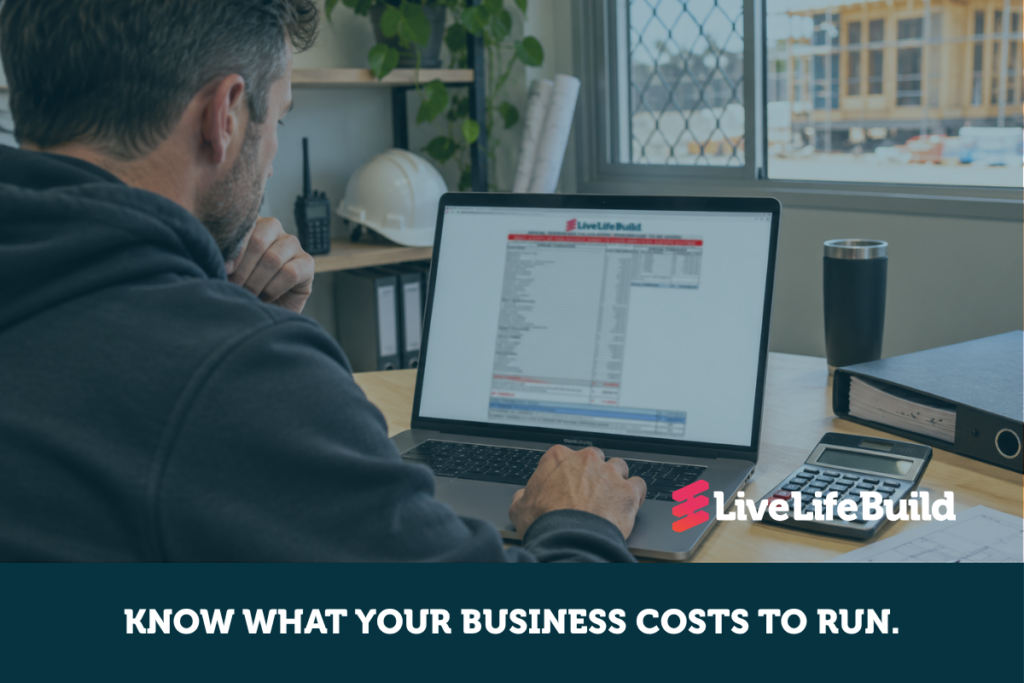
Most builders are good at pricing the labour, materials and hardware a project needs. Where it falls over is the cost of running the business itself.
Instead of working it out, many builders add a margin they hope will cover their overheads and leave a bit of profit. Often that figure is just the percentage that gets thrown around in the industry, or the one printed in the contracts they use. But that one number has to cover everything it costs to keep the doors open, from vehicles and insurances to software, admin and paying yourself properly, and still leave a profit. If you’ve never worked out what your business actually needs, you’re guessing.
Your overhead margin needs to cover the cost of running the business. Your profit margin then sits on top of it. Without both, every new job adds turnover but not profit, and you end up chasing more work to fix a cash flow problem that more work can’t fix.
Once Duayne understood his true running costs, he noticed a pattern. On the jobs where he was told he was too expensive, the gap was usually close to what it cost to run his business. The builders he was up against weren’t allowing for their overheads properly. That gave him confidence his pricing was right, and when he focused on selling his quality and service, the jobs he won were profitable.
Work out your overheads with LaunchPad
Inside LaunchPad, you get the Overheads Calculator, a downloadable Excel file that walks you through every cost of running your business. Instead of guessing a margin, you know what each job needs to recover before you add your profit.
The result is pricing you can back with confidence, and a clear answer when someone tells you you’re too expensive.
Overlooking admin and overhead costs when pricing jobs, not knowing your break-even point and quoting too low to win work all appear on Live Life Build’s Profitability Leaks worksheet, and each one can turn a busy year into an unprofitable one. For more on where margin quietly slips away, read more on the Live Life Build blog.
Why tendering keeps residential builders racing to the bottom
Tendering is an old-fashioned way of doing business. It can work on large government and commercial projects, but on residential builds it leaves plenty of room for things to go wrong.
A tender usually comes down to the lowest price, whether or not there’s any truth in that price. What often follows is endless variations, unhappy clients and, sometimes, projects that never get finished. Nobody wins: not the builder, not the client and not the designer.
A tender rarely looks at how each builder’s business is set up, or what has actually been allowed for.
What a tender rarely compares
- Is the builder still on the tools?
- Does the builder have supervisors?
- How big is the business, and is there office support?
- How will the contract be managed?
- What communication will happen throughout the build?
What a tender rarely reveals
- What standard of work does the builder deliver?
- Has everything in the specification, and everything discussed with the clients, been allowed for?
- Are the allowance items priced realistically?
- Have any materials been swapped for cheaper versions?
- How long has the builder been in business?
Every one of those factors affects a builder’s running costs, and the difference between builders can be significant. Comparing tenders on price alone ignores all of it.
That’s why Duayne developed the PAC Process in his own building business. As a builder Paid As Consultant during pre-construction, you become part of the project team early, and the focus shifts from the lowest price to getting the project right. Learn more about the PAC Process on the Live Life Build blog.
Your knowledge, experience and expertise are worth a lot, especially when you have systems and processes that deliver value to the whole project team. Think about how much time you and your team spend solving problems, writing scopes of work, pricing and submitting tenders that nobody values.

Run your own race and price with confidence
Getting out of the race to the bottom isn’t about becoming the most expensive builder in town. It’s about knowing your numbers, valuing your time and choosing the right clients with the right process. Those are the three Standards behind the Profitability Code in the Successful Builder Solution, and they’re where confident pricing comes from.
A few questions worth sitting with this week:
- Honestly, which reason is your business busy for?
- Do you know exactly what it costs to run your business each year?
- When did you last drop your price to win a job, and did that job make money?
- How much unpaid time are you spending on quotes and tenders for clients who may not be the right fit?
Spending unpaid time preparing quotes for bad-fit clients and taking on extra projects out of fear of losing opportunities are both on the Business Black Holes worksheet. If you recognised yourself in any of those questions, that’s not a failure. It’s your starting point.
Pricing your building projects: build your version of success with LaunchPad
You became a builder because you’re good at building. The business side is a different skill, and it can be learned. Once you understand what your business is worth and what it costs to run, you can stop competing on price and start backing the service and quality you deliver.
Imagine pricing a job and knowing it covers the cost of running your business, pays you properly and still leaves time for your family and the life you’re building outside of work. That’s what being busy for the right reason looks like.
LaunchPad is the best place to start. It gives you a practical foundation in the business behind the build, so you can strengthen how you price, run and grow your building business at your own pace.
And when you’re ready for ongoing coaching, accountability and a community of builders working through the same challenges, Elevate is there as your next step.